Serengeti Antelopes Safari Guide – Discover Tanzania’s Most Iconic Antelope Species
The Serengeti National Park in Tanzania is one of the most extraordinary wildlife destinations in Africa. Covering nearly 30.000 square kilometers, this vast ecosystem is home to more than 20 antelope species, making it a paradise for wildlife lovers, photographers, and safari travelers.
On a Serengeti safari with Afrimine Tours, antelopes are the rhythm of the plains, the movement in the grass, and the foundation of the entire ecosystem.
This complete Serengeti antelopes guide introduces the most important species you will encounter, including their behavior, physical characteristics, habitats, and best places to spot them.
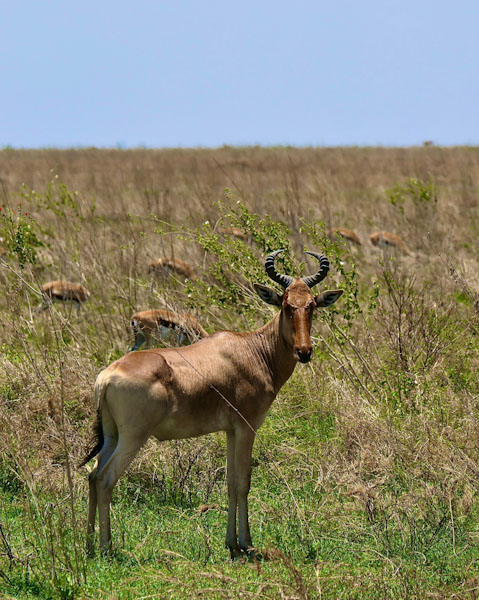
Topi Antelope – Alert Guardians of the Serengeti Plains
The Topi antelope is easily recognized by its deep reddish-brown to purplish coat and dark facial markings. Medium-sized and highly social, topis are often seen standing on termite mounds, scanning the horizon for predators.
Topi behavior & features:
Prefer open floodplains and grasslands
Often graze alongside wildebeest
Extremely alert and territorial
Most active in early morning and late afternoon
Can survive long periods without drinking when grazing on green grass
Topis are commonly seen during Serengeti game drives, especially in open plains.
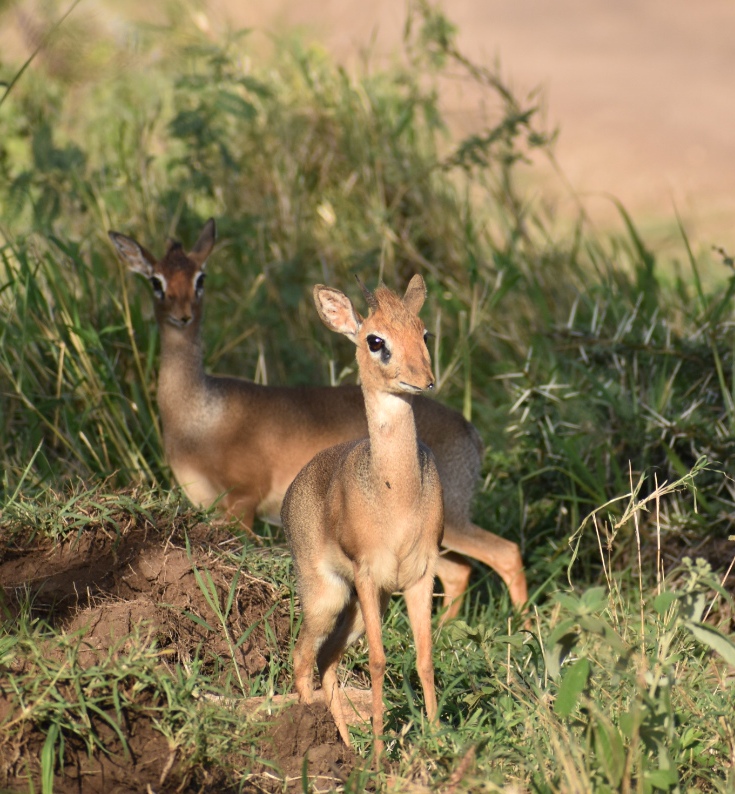
Dik-Dik – The Smallest Antelope in the Serengeti
The Dik-Dik antelope is the smallest antelope species in the Serengeti, standing only up to 40 centimeterstall. These tiny antelopes live in dense vegetation and are often spotted briefly before disappearing again.
Dik-Dik characteristics:
Large eyes with white rings for excellent vision
Males have short horns hidden by a tuft of hair
Live in monogamous pairs
Females produce the sharp ‘dik-dik’ alarm call
Obtain most of their water from leaves and shoots
Dik-diks are a favorite among photographers due to their size and charm.
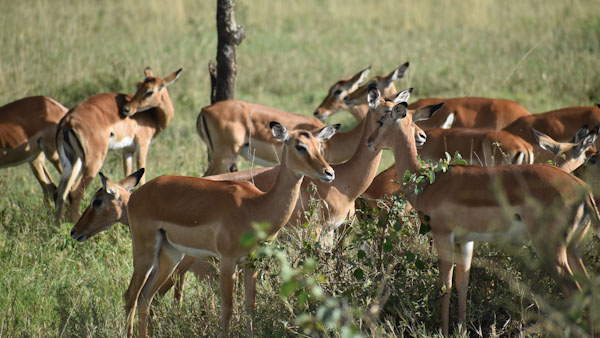
Impala Antelope – Grace, Speed, and Acrobatics
The impala is one of the most elegant and widespread antelope species in Tanzania. With their reddish-brown coats, black leg markings, and impressive jumping ability, impalas are a highlight of any Serengeti safari.
Impala behavior & identification:
Males have long, curved horns; females are hornless
Live in large herds for protection
Can leap up to 10 meters in distance
Extremely fast and agile
Often drink water during the hottest part of the day
Their athletic movements make them one of the most photographed animals in the Serengeti.
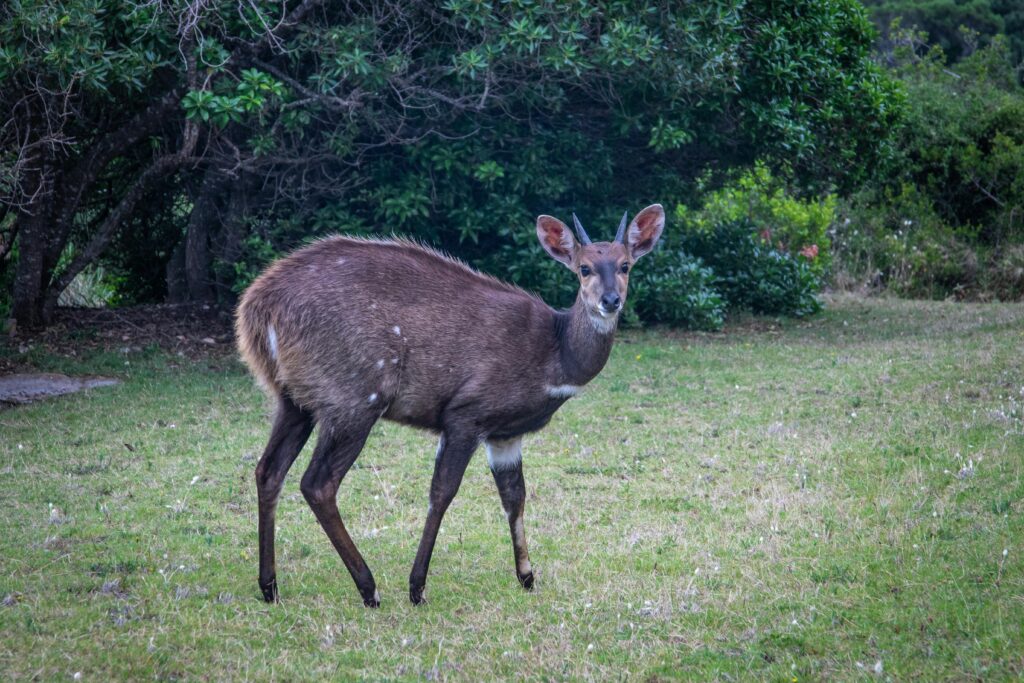
Bushbuck – The Elusive Forest Antelope
The bushbuck antelope prefers forest edges, riverbanks, and dense bush areas within the Serengeti ecosystem. Unlike many other antelopes, bushbucks are solitary and secretive.
Bushbuck traits:
Males have spiral horns; females do not
Feed slowly and silently
Known to freeze or drop suddenly when threatened
Powerful jumpers capable of clearing high obstacles
Active mostly at dawn and dusk
Spotting a bushbuck requires patience and a sharp eye.
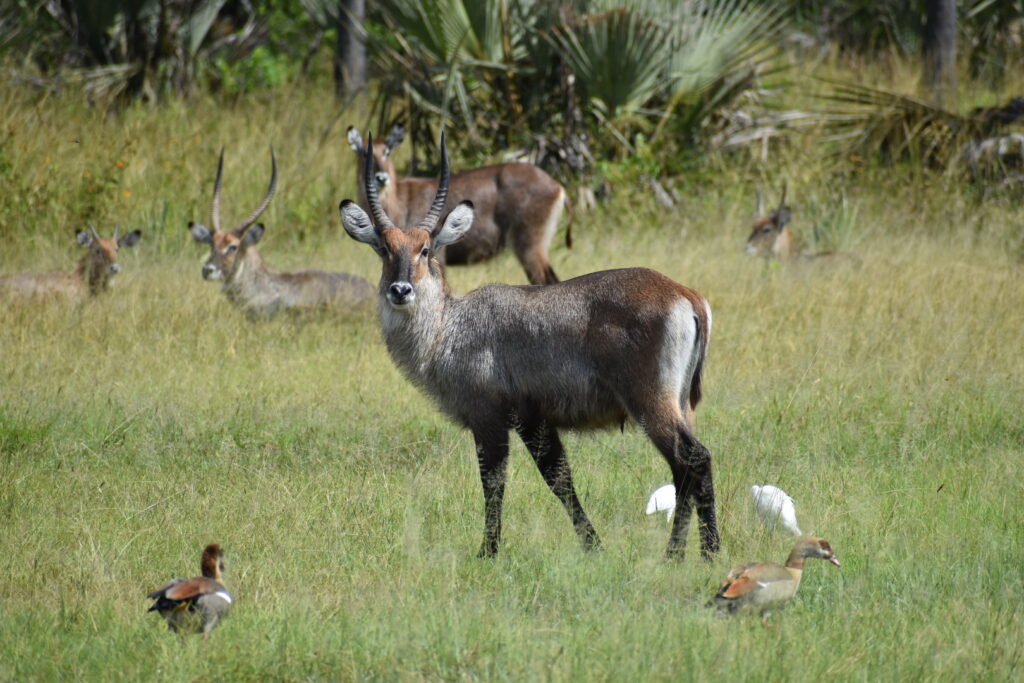
Waterbuck – The Antelope of Rivers and Wetlands
The waterbuck is one of the most distinctive antelopes in the Serengeti. Its thick, shaggy coat is coated with an oily substance that repels water and predators.
Waterbuck features:
Always found near permanent water sources
Large round ears and white facial markings
Famous white ring on the rump
Strong swimmers
Less favored prey due to coarse meat
They are commonly seen in the Central Serengeti, especially around Moru Kopjes.
Grant’s Gazelle – Endurance Specialist of the Savanna
The Grant’s gazelle is well adapted to dry grasslands and open savannas across Tanzania.
Grant’s gazelle characteristics:
Tan to reddish-brown coat with black side stripe
White rump patch
Males have elegant lyre-shaped horns
Can survive long periods without drinking water
Fast, agile, and highly alert
Grant’s gazelles are often seen standing tall and confident in open terrain.
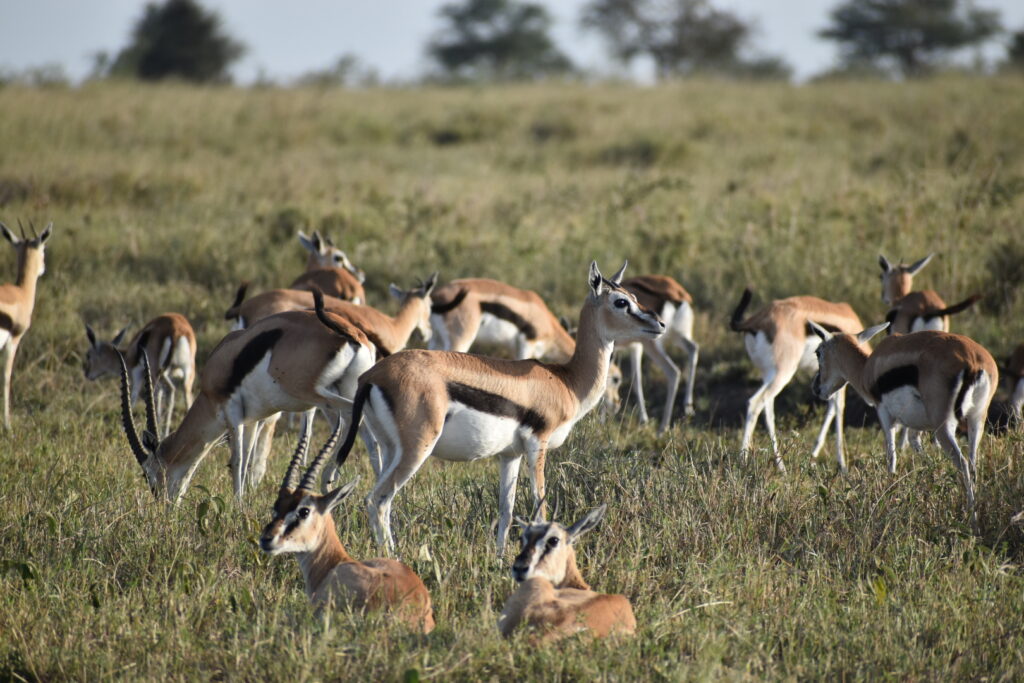
Thomson’s Gazelle – The Cheetah’s Favorite Prey
The Thomson’s gazelle is one of the most common antelopes in the Serengeti, with a population exceeding 500.000 individuals.
Thomson’s gazelle behavior:
Smaller than Grant’s gazelle
Distinct dark stripe along the side
White rump for visual signaling
Exceptional speed and awareness
Primary prey species for cheetahs
Their constant movement adds life and tension to the plains.
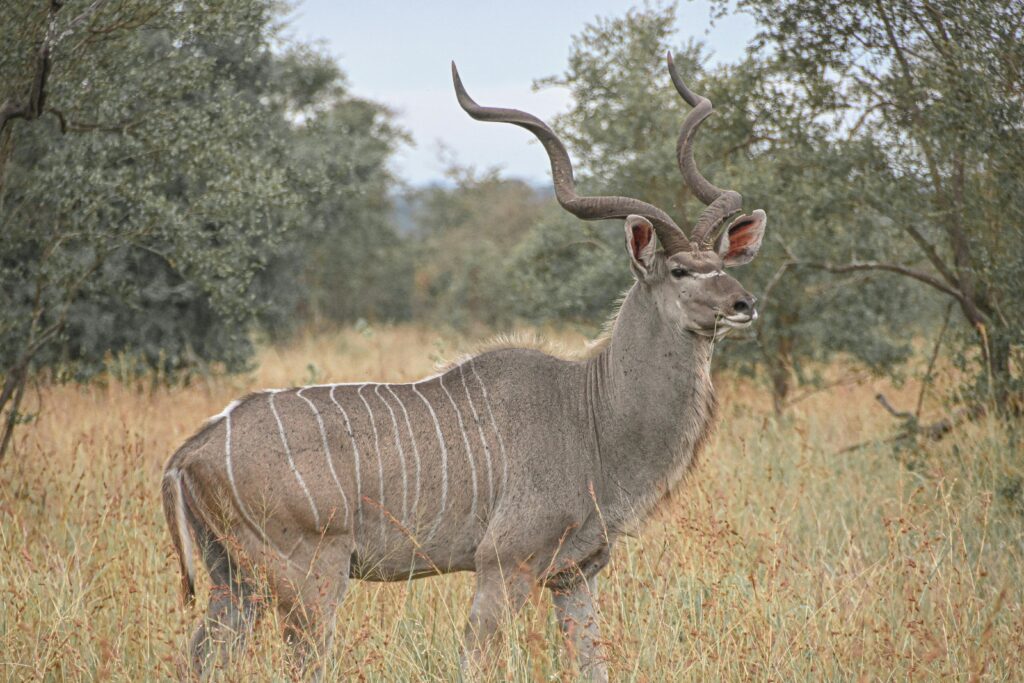
Lesser Kudu – A Rare Serengeti Antelope
The lesser kudu is one of the most elusive antelopes in Tanzania and is mainly found in the southwestern Serengeti.
Lesser kudu features:
Slender body and shy behavior
Weighs between 92–108 kg
Prefers warm, dry environments
Gains moisture from fruits and leaves
Rarely seen on standard game drives
A sighting is considered a special safari reward.
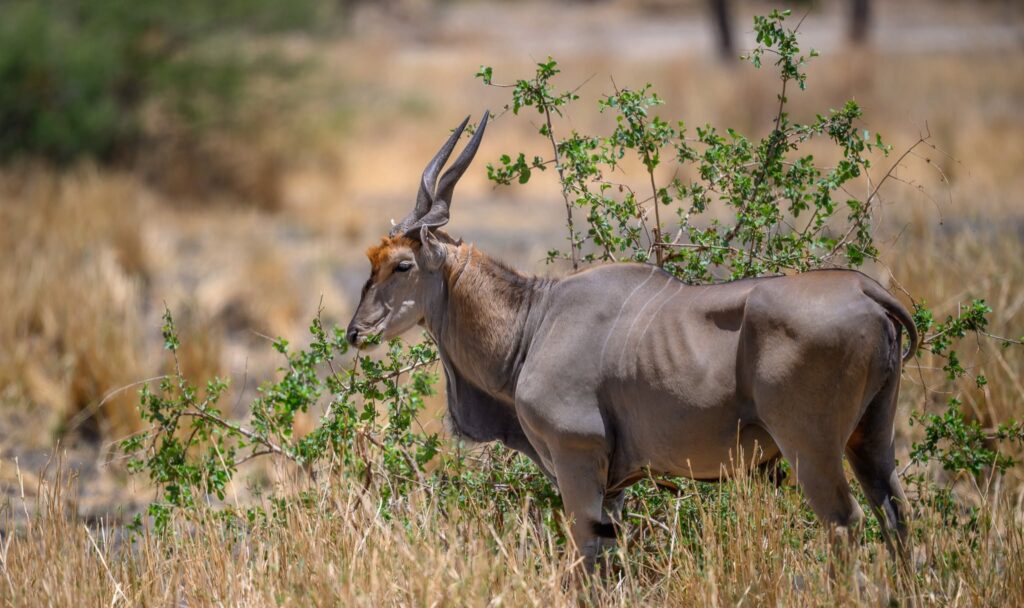
Eland – The Largest Antelope in the Serengeti
The eland antelope is the largest antelope species in the Serengeti and one of the most impressive to encounter.
Eland behavior & traits:
Massive body with surprising agility
Shy and difficult to approach
Seasonal movement between northern woodlands and southern plains
Can run fast and jump high despite size
More tolerant of vehicles in Ngorongoro Crater
Their calm presence leaves a lasting impression.
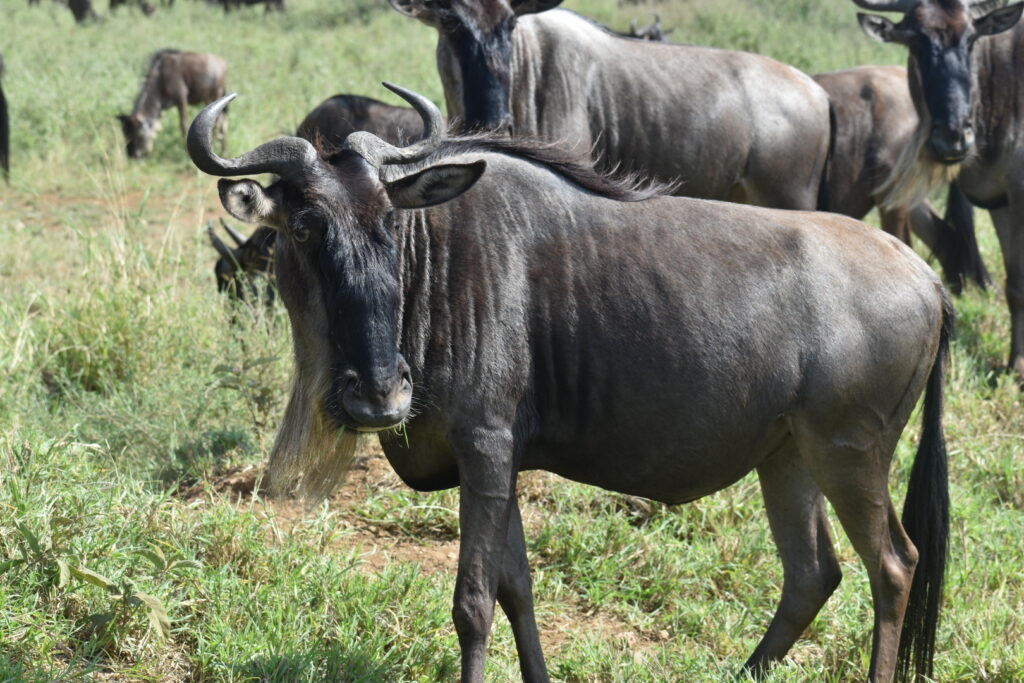
Wildebeest – The Heart of the Great Migration
The wildebeest, also known as gnu, is the most iconic antelope of the Serengeti and the driving force behind the Great Wildebeest Migration.
Wildebeest characteristics:
Long rectangular heads and flowing manes
Curved horns on both males and females
Herbivores feeding mainly on grass
Highly social and vocal
Travel in massive herds across the Serengeti–Mara ecosystem
Their migration sustains predators and defines the Serengeti’s identity.
With Afrimine Tours, you experience the Serengeti through expert guides, carefully planned routes, and authentic wildlife encounters.
Customized Serengeti safari tours
Expert local guides with deep wildlife knowledge
Ethical and sustainable tourism
Exceptional wildlife viewing opportunities
Plan your Serengeti antelope safari with Afrimine Tours and experience Tanzania’s wildlife the way natureintended.