Rau Forest in Moshi -
A Hidden Green Escape Before Your Kilimanjaro Trek
Discover the quiet side of Moshi – walk beneath ancient trees, look for black-and-white colobus monkeys, cycle through rice fields and support local conservation before you climb Mount Kilimanjaro.
When travellers arrive in Moshi for a Kilimanjaro expedition, the mountain naturally becomes the focus of attention.
But before putting on your hiking boots and heading towards the roof of Africa, there is another side of the Kilimanjaro region worth discovering.
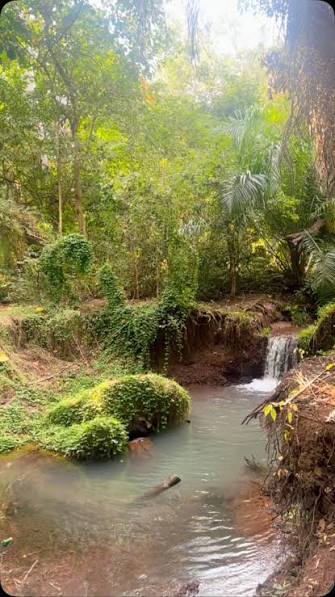
Just a few kilometres from Moshi town lies Rau Nature Forest Reserve, a peaceful groundwater forest that feels surprisingly far removed from the bustle of the city.
For Afrimine Tours, Rau Forest is one of those places that perfectly represents the Tanzania we love: nature, local communities, wildlife and responsible travel coming together in one authentic experience.
Where is Rau Forest?
Rau Nature Forest Reserve is located approximately 3 kilometres from Moshi town, on the southern slopes of Mount Kilimanjaro. The reserve covers around 5.8 km² and lies at an altitude of approximately 730–765 metres.
Unlike the highland forests found on the slopes of Kilimanjaro, Rau is a lowland groundwater forest. Water from the Kilimanjaro area plays an important role in sustaining this unique ecosystem and the surrounding agricultural landscape.
The forest is also remarkably close to a growing urban centre, making it a special green refuge for both wildlife and people.
And that is part of its charm.
You don’t need to spend hours travelling from Moshi to experience nature. Within a short drive, bicycle ride or walk, the city gradually gives way to forest, rice fields, waterways and village life.
Step Into a different world
The moment you enter Rau Forest, the atmosphere changes.
The sounds of Moshi disappear behind you and are replaced by birdsong, insects, rustling leaves and the gentle sounds of the forest.
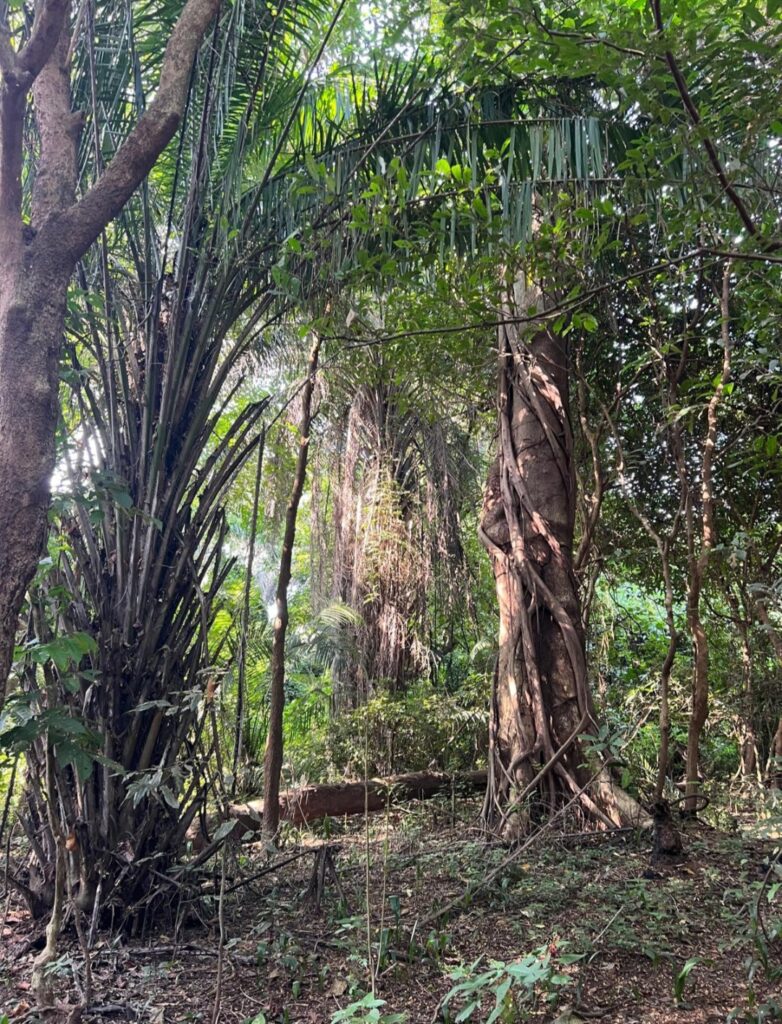
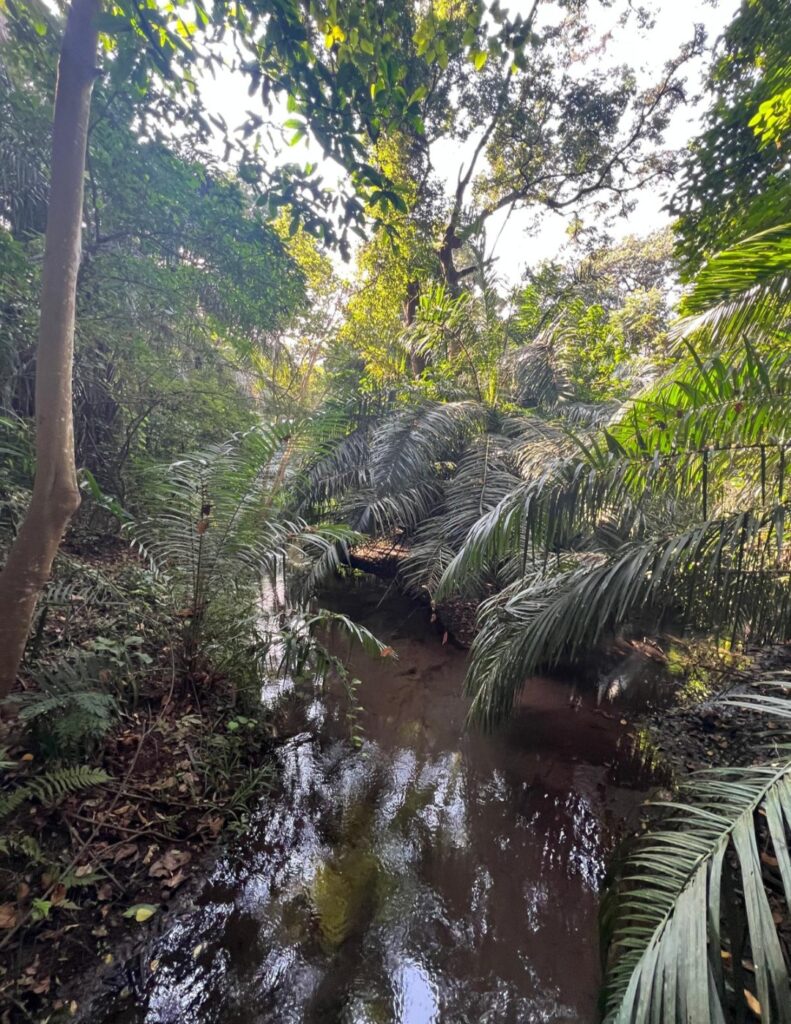
The canopy provides shade and a cooler environment, while the forest trails lead past enormous indigenous trees, small waterways and areas of dense vegetation.
Rau is home to more than 70 native tree species, including the impressive Mvule tree (Milicia excelsa). The forest is also known for the regionally endemic tree Oxystigma msoo.
For visitors, this means that a walk through Rau is not simply a hike.
It is a chance to learn.
A local guide can explain how different trees are traditionally used, which plants have medicinal importance, how the forest functions as a water catchment area and why protecting this ecosystem matters to communities around Moshi.
Wildlife in Rau Forest
You may be surprised by how much wildlife can be found so close to Moshi.
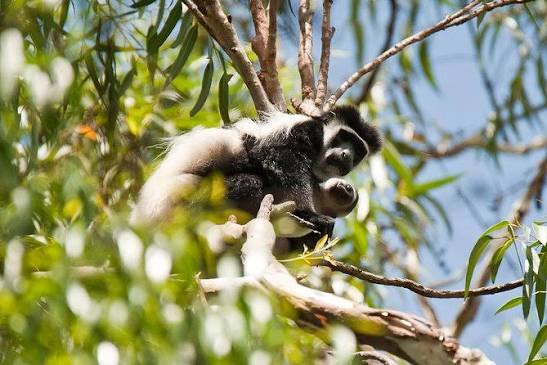
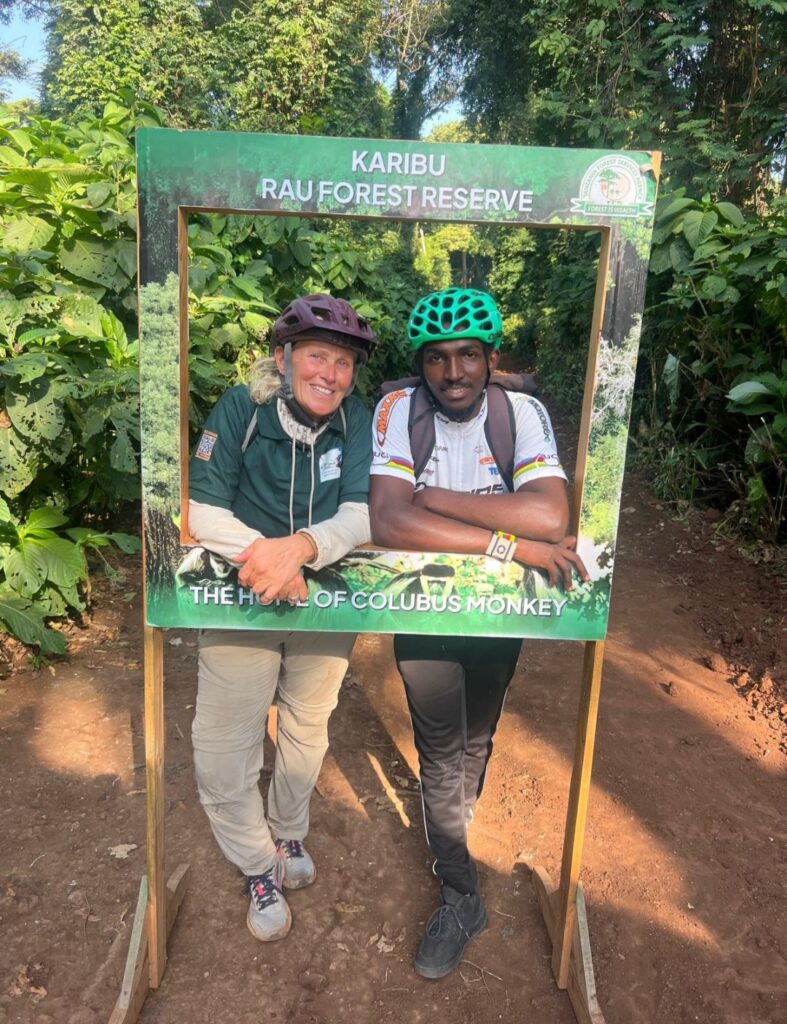
One of the forest’s most famous residents is the black-and-white colobus monkey.
Look carefully into the treetops and you may see these beautiful monkeys moving through the canopy, their striking black-and-white coats and long tails making them relatively easy to recognise.
Rau is also home to blue monkeys, while other wildlife includes squirrels, dik-dik and a fascinating variety of butterflies, birds, reptiles and insects.
Of course, wildlife sightings are never guaranteed – and that is exactly what makes the experience special.
There are no cages, performances or feeding sessions.
You walk quietly through the forest, listen, look upwards and allow nature to reveal itself.
Sometimes it is a monkey high above your head.
Sometimes it is an unusual bird.
Sometimes it is simply an enormous tree, a colourful butterfly or the sound of water moving through the forest.
Rau Forest is about observation rather than expectation.
The Giant Mvule Tree
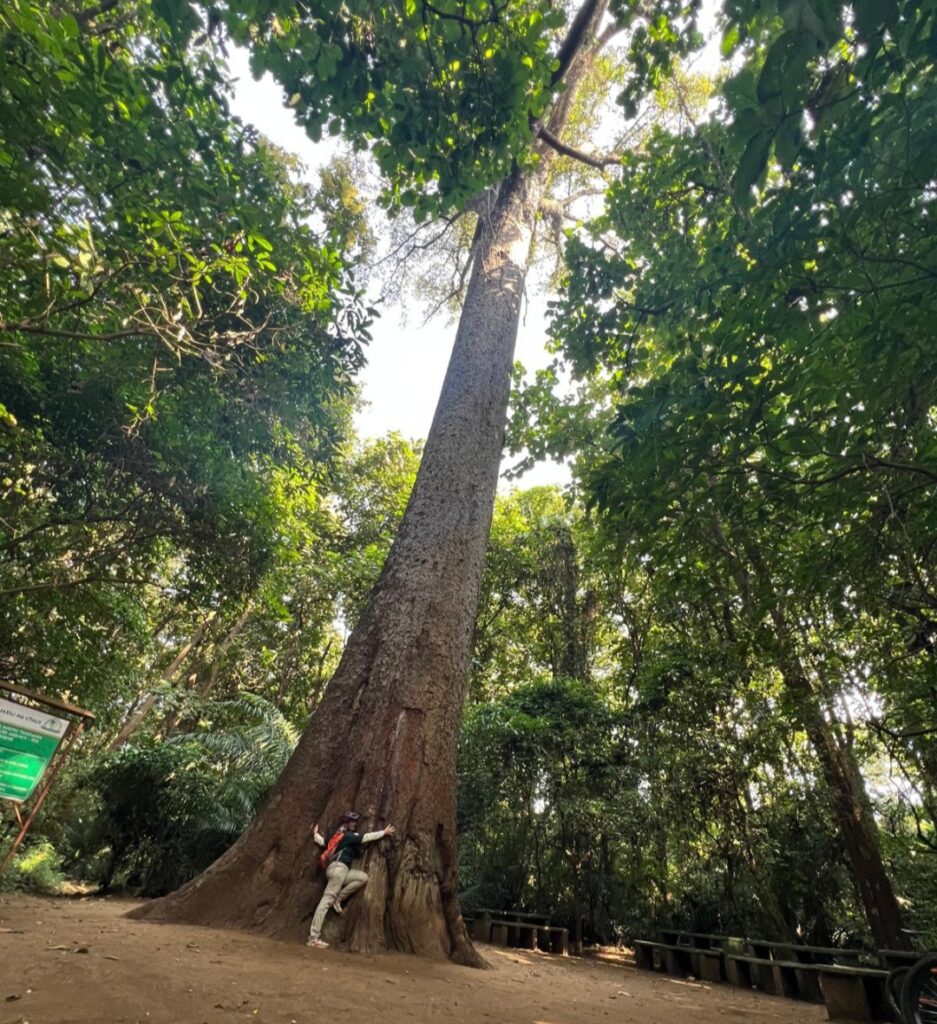
One of Rau Forest’s most impressive natural landmarks is its enormous Mvule tree, also known as African teak (Milicia excelsa).
The tree is believed to be around 200 years old and is one of the forest’s most remarkable examples of ancient indigenous vegetation. Tanzania’s tourism authorities also highlight the Mvule as one of the reserve’s major attractions.
Standing beneath a tree of this size puts the scale of the forest into perspective.
Before your Kilimanjaro climb, it is a beautiful reminder that Tanzania’s natural heritage is not only found on the summit of Africa.
It is also found in the forests below it.
A Guided Rau Forest Walk
For many travellers, a half-day guided nature walk is the perfect way to experience Rau Forest.
The walking itself is not a technical hike. You don’t need previous trekking experience – normal physical fitness is sufficient.
A typical forest walk takes around three hours, although experiences can be adapted depending on your interests and available time.
The walk can combine:
- Forest trails and ancient trees
- Searching for black-and-white colobus and blue monkeys
- Butterflies and forest insects
- Birdwatching
- Learning about traditional uses of plants
- Discovering the forest’s water sources
- Walking beside the surrounding rice fields
- Experiencing local food and village life
What makes the experience particularly enjoyable is the local knowledge.
Instead of simply walking through the forest, your guide helps you understand what you are looking at.
From Forest to Rice Fields
One of the most beautiful parts of a Rau Forest experience is the transition from dense forest to the open agricultural landscape surrounding Moshi.
Suddenly, the view opens up.
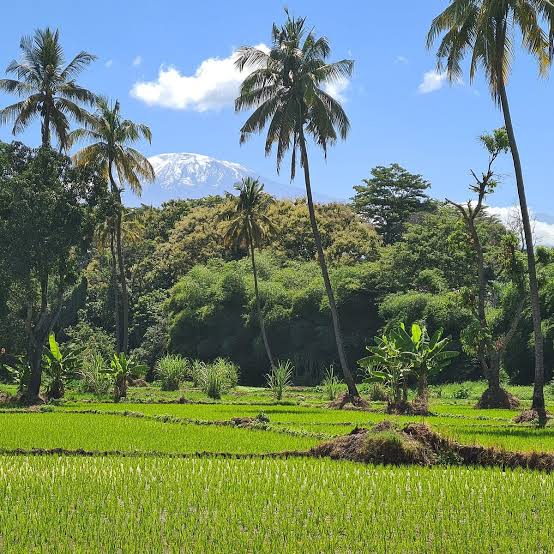
Green rice paddies stretch across the lowlands, birds gather around the water and, when the weather is clear, Mount Kilimanjaro can appear in the distance.
The contrast is wonderful.
You may spend the morning beneath a thick forest canopy and later stand beside bright green rice fields with Africa’s highest mountain rising behind them.
It is an excellent introduction to the landscape you are about to explore on your Kilimanjaro adventure.
Explore Rau Forest by Mountain Bike
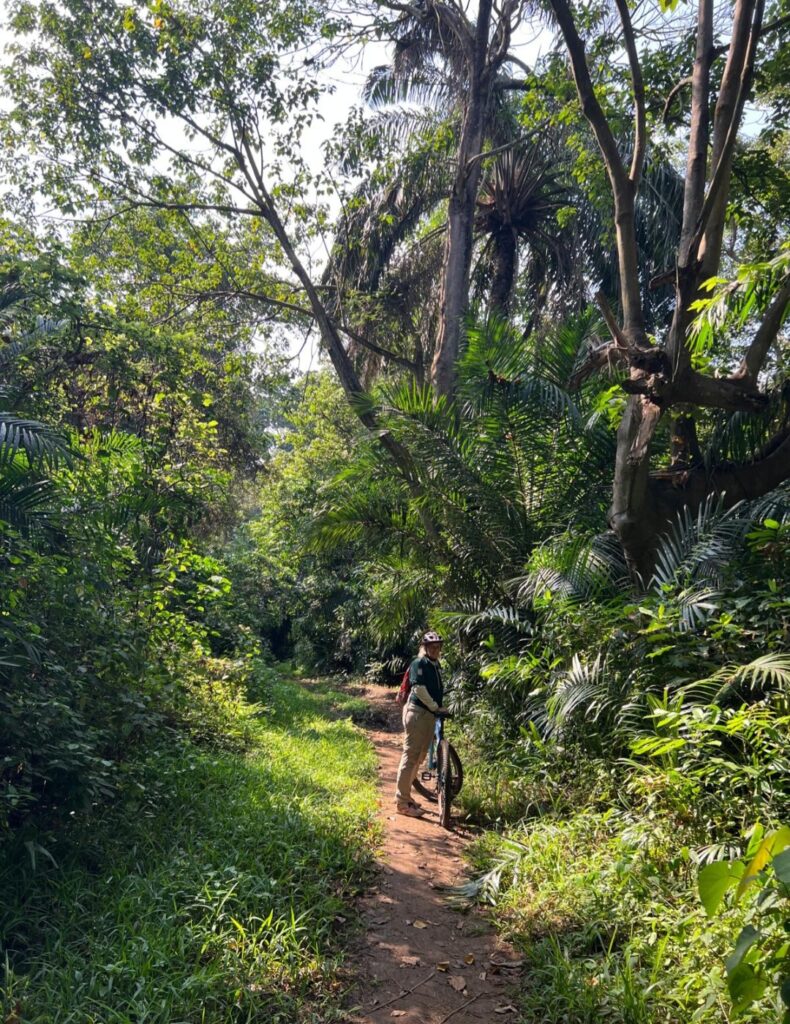
If you prefer something more active, Rau Forest can also be explored by mountain bike.
Cycling allows you to connect several different landscapes in one experience: Moshi’s rural outskirts, rice fields, sugarcane plantations, village paths and the forest itself.
Depending on the route, the cycling can include both paved and off-road sections. The trails are not designed as a technical mountain-bike course; this is more about adventure, nature and discovering rural Tanzania on two wheels.
Along the way, you may pass:
- Rice fields
- Sugarcane plantations
- Small villages
- Local farms
- Forest trails
- Rural roads
- Traditional homes
- Wildlife habitats
And of course, there is always the possibility of stopping to look into the trees for colobus monkeys.
For active travellers, this is a wonderful way to experience the countryside around Moshi without sitting in a vehicle.
ist.
A Different Kind of Kilimanjaro Preparation
We especially recommend Rau Forest for travellers who arrive in Moshi one or two days before their Kilimanjaro trek.
Why?
Because your first day in Tanzania does not need to be spent rushing from one attraction to another.
A gentle forest walk gives you the opportunity to:
slow down – breathe – move your body – enjoy nature – meet local people – prepare mentally for the mountain.
After a long international journey, a relaxed walk through Rau Forest can be a much better introduction to Tanzania than spending the entire day in a vehicle.
And because the forest is at low altitude, the experience is very different from the trekking environment that awaits you higher on Kilimanjaro.
It is not a substitute for acclimatisation, but rather a peaceful and active way to begin your Tanzania adventure.
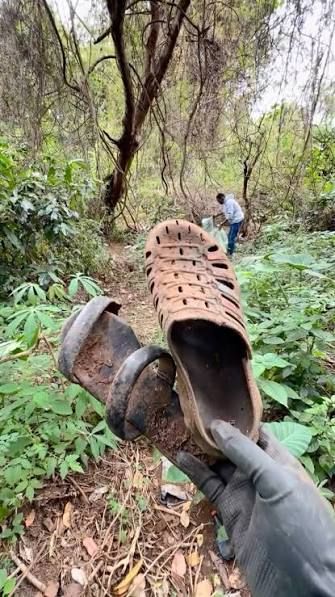
Travel With a Purpose: Clean-Up Days in Rau Forest
Rau Forest is beautiful – but like many natural areas close to growing communities, it faces environmental pressure.
Plastic and other waste can enter the forest and its waterways, particularly during periods of heavy rainfall and flooding.
This is why forest cleaning and environmental awareness have become an important part of conservation work in Rau.
In March 2026, a coordinated clean-up operation involving Tanzania Forest Services and several environmental partners removed 155 kilograms of waste from sensitive areas of the reserve. The clean-up focused particularly on water sources, trails and areas affected by waste carried into the forest by seasonal floods.
Earlier community initiatives have also brought together schoolchildren and volunteers for clean-up activities along the Rau River and in the forest. One such project collected large quantities of plastic litter and used the experience to teach young people about responsible waste management.
This is more than simply picking up rubbish.
The Rau Forest ecosystem is connected to water, agriculture, wildlife and the communities living around Moshi.
Keeping the forest clean means helping to protect all of these elements.
Can Travellers Take Part?
Responsible tourism should not only mean taking beautiful photographs.
It can also mean giving something back.
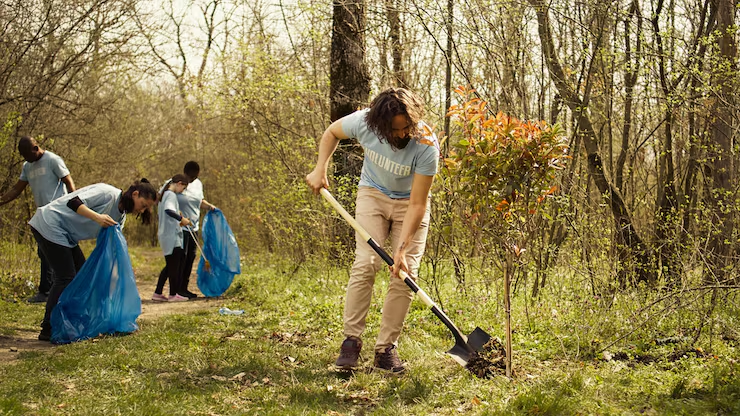
Local conservation initiatives around Rau include activities such as forest cleaning, trail maintenance, tree planting, environmental education and reforestation. Rau Eco & Cultural Tourism also works with local communities to raise awareness about conservation, waste management and forest protection.
For travellers who would like to make their visit more meaningful, a conservation-focused experience can be arranged depending on the current local programme and activities available.
Imagine finishing your forest walk not only with photographs and memories, but knowing that you have also helped leave the forest a little cleaner than you found it.
That is the kind of travel we believe in.
Supporting Local Communities
Rau Forest is also an excellent example of how tourism can benefit local people.
Community-based tourism initiatives around the forest involve local guides, youth and women, as well as local families providing food and cultural experiences.
Rau Eco & Cultural Tourism, for example, was established as a youth-led community-based tourism initiative and focuses on connecting responsible travellers with communities around Rau Forest while supporting conservation and sustainable tourism.
Your experience can therefore become more than a sightseeing trip.
You meet people.
You hear their stories.
You taste local food.
You learn about agriculture.
And you gain a better understanding of the place you are visiting.
Visit Rau Forest Before Climbing Kilimanjaro
If Kilimanjaro is your main goal, you might wonder whether you should spend time exploring somewhere else before your trek.
We believe the answer is yes.
Rau Forest offers something completely different from the mountain.
On Kilimanjaro, you will experience changing vegetation zones, steep trails, high-altitude landscapes and eventually the dramatic summit environment.
In Rau, you experience the lowland ecosystem, wildlife, agriculture and everyday life around Moshi.
Together, these experiences tell a much bigger story about Kilimanjaro.
And perhaps most importantly, Rau Forest encourages you to slow down.
Before the early starts.
Before the long trekking days.
Before the summit push.
There is time to breathe.
Our Favourite Way to Experience Rau Forest
For guests staying in Moshi before their Kilimanjaro expedition, we particularly like combining a guided Rau Forest walk with the surrounding rice fields and a local lunch.
For more active travellers, we can arrange a mountain-bike experience through the countryside and forest.
And for guests who want to travel with an even stronger conservation focus, we can explore opportunities to include a forest clean-up, tree planting or other community conservation activity, depending on the current local programme.
It is an experience that combines:
Nature. Wildlife. Community. Movement. Conservation.
And that is exactly what responsible travel should feel like.
Rau Forest & Kilimanjaro
One Journey, Many Experiences
Your Kilimanjaro adventure doesn’t have to begin when you reach the trailhead.
It can begin the moment you arrive in Moshi.
Walk through a forest that few international travellers know.
Look for colobus monkeys in the canopy.
Cycle through rice fields.
Meet local people.
Learn about Tanzania’s plants and wildlife.
Stand beneath an ancient Mvule tree.
See Kilimanjaro from the lowlands.
And, if you wish, give something back by helping to protect the environment.
Then, when the time comes, turn your eyes towards the mountain.
Kilimanjaro is waiting.
But first, discover the forest at its feet.
Ready to discover the hidden side of Moshi?
At Afrimine Tours, we can combine your Rau Forest experience with your stay in Moshi and your Kilimanjaro expedition – creating a journey that goes beyond simply climbing Africa’s highest mountain.
Whether you prefer a peaceful nature walk, an active mountain-bike adventure or a meaningful conservation experience, Rau Forest is a wonderful way to begin your Tanzanian adventure.
Karibu Tanzania and karibu to the forest.